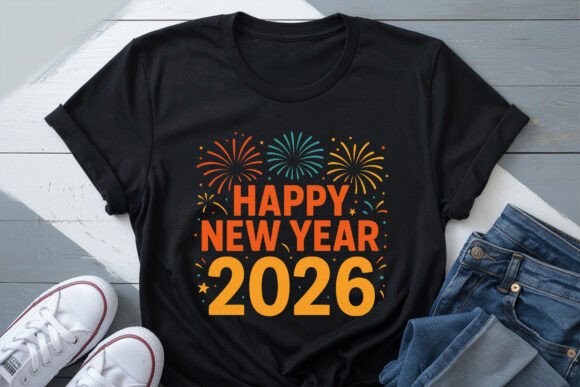
Happy New Year 2026 31st Night Shirt PNG: A Designer's Take
I pulled up the Happy New Year 2026 31st Night Shirt PNG this morning while sketching out a client's holiday product line. She runs a small boutique that sells embroidered sweatshirts and tote bags at local markets, and she needed something festive that would still feel fresh after the clock strikes midnight. The moment I saw the transparent PNG file, I knew we had a solid starting point — but as any embroidery designer will tell you, a graphic that looks great on screen doesn't always translate cleanly to thread and fabric.
So I spent some time really studying this design, thinking through how it would behave on different materials, what stitch types would bring it to life, and whether it could hold its own after repeated washes and real-world wear. What follows is my honest, practical assessment from the perspective of someone who digitizes and stitches designs for actual paying customers.
First Impressions: A Celebration That Feels Personal
The first thing that struck me about the Happy New Year 2026 31st Night Shirt PNG is the mood it creates. It doesn't feel like a generic holiday clipart piece you'd grab from a free library. There's a warmth to the layout — the kind of design that makes someone want to wear it on New Year's Eve while hosting friends, or gift it to a loved one as a keepsake for the year ahead. The theme is unmistakably celebratory, but it leans more toward cozy gathering energy than loud party chaos, which opens up a lot of product possibilities.
The transparent PNG comes in at an impressive 4500x5400 pixels at 300dpi. That's a generous canvas size, and it means I can scale the artwork down for a baby onesie or up for a full-back sweatshirt print without losing clarity. For embroidery digitizing purposes, having a high-resolution source file is non-negotiable. When I import a low-res image into my digitizing software, the edges get fuzzy, and I end up guessing where the satin stitch borders should land. With this file, the lines are crisp, and the details read clearly even when I zoom in tight.
Where This Design Truly Belongs
I mentally ran through my typical product categories while examining the Happy New Year 2026 31st Night Shirt PNG. Here's where I see it performing best:
- Oversized sweatshirts and hoodies: The scale of the design works beautifully on a roomy front panel. I can picture a cream-colored crewneck with the design stitched in metallic gold and deep navy thread, something that feels elevated but still wearable.
- Canvas tote bags: A sturdy tote with this design embroidered near the top corner would sell well at winter craft fairs. The density of the artwork is substantial enough to hold its own on a structured bag without looking lost.
- Pillow covers: Seasonal throw pillows are a strong category for handmade sellers. A linen-blend pillow cover with this design in a soft ivory thread could transition from Christmas decor right through January.
- Embroidered patches: I could see digitizing a simplified version as a collectible patch. The theme lends itself to a keepsake feel, and patches are easy to market as stocking stuffers or party favors.
- Kitchen towels and aprons: For hosts who love themed gatherings, an embroidered tea towel or apron featuring this design would make a thoughtful hostess gift.
The design also works well for digital product sellers who create printable mockups. The transparent background makes it easy to layer onto product photos, giving Etsy listings a polished, professional look without hours of editing.
Thinking Through Real Stitching Behavior
Here's where experience matters. A PNG file is not an embroidery file — it's a starting point. When I look at the Happy New Year 2026 31st Night Shirt PNG, I'm already thinking about how the digitizing process will unfold. The design appears to have a balanced mix of shapes, which is good news. Dense, blocky areas can turn into stiff, uncomfortable patches on garments if the stitch density isn't managed carefully. I would plan to use a combination of fill stitches for larger areas and satin stitches for borders and text elements, keeping the overall stitch count reasonable so the fabric doesn't pucker.
For textured fabrics like terry cloth or chunky knit sweaters, I'd recommend a test run first. The design's details might need slight adjustments — thicker outlines or slightly larger lettering — to read clearly on uneven surfaces. On smooth cotton or polyester blends, though, I expect the stitching to come through cleanly with the right stabilizer underneath.
Fabrics and Products That Demand Extra Care
Not every product is a natural fit, and part of being a responsible designer is knowing when to exercise caution. Here are the situations where I'd think twice before committing the Happy New Year 2026 31st Night Shirt PNG to thread:
- Small hoop sizes: If the design contains intricate details or small text, cramming it into a 4x4 inch hoop could result in muddy stitching. I'd want to test a scaled-down version before offering it as a pocket-sized design.
- Thin or stretchy fabrics: Lightweight jersey and rayon blends can shift during stitching. A dense design on these materials risks distortion. I'd use a heavy cutaway stabilizer and possibly add a topper for clean results.
- Dark fabrics: The contrast between thread and fabric matters enormously. What looks vibrant on a white mockup might disappear on a black t-shirt. I'd test the design on both light and dark backgrounds before finalizing any product listing.
- Curved surfaces like caps: The layout of the design might not wrap naturally around a baseball cap's front panel. I'd consider a modified version with a more compact, centered arrangement for headwear.
- Items that get frequent washing: Kitchen towels and baby items need designs that can survive dozens of laundry cycles. The stitch density and thread choice need to be durable, and I'd run a few wash tests before selling anything.
The Visual Personality and Buyer Appeal
There's something about the Happy New Year 2026 31st Night Shirt PNG that feels genuinely celebratory without being overly trendy. The design has a timeless quality that could appeal to a broad range of customers — from young adults hosting their first New Year's party to families looking for matching holiday outfits. From a seller's perspective, that's valuable. A design that only appeals to a narrow niche has a shorter selling window, but this one feels like it could move well across multiple demographics.
I also appreciate how the design communicates the holiday instantly. When a customer scrolls through Etsy or browses a craft fair booth, they make split-second decisions based on visual recognition. A design that clearly says "New Year's" without needing a second glance has a better chance of stopping that scroll and generating a click — or a purchase.
Practical Notes for Embroidery Designers and Sellers
Before you list a finished product made with the Happy New Year 2026 31st Night Shirt PNG, I'd recommend working through a few essential steps. These are the habits that separate professional results from disappointing ones:
- Test on scrap fabric first. Even if you've worked with similar designs before, every artwork behaves differently once digitized. Run a stitch-out on cotton, on fleece, and on whatever material you plan to sell. Take notes on thread tension, trims, and any areas that need adjustment.
- Check thread color contrast. The colors you see on screen may not match your thread inventory perfectly. Hold physical thread spools next to the printed design or a color-calibrated screen to confirm your choices before committing to a production run.
- Review stitch density carefully. A design that's too dense will feel stiff and uncomfortable on apparel. A design that's too sparse will look thin and unprofessional. The sweet spot is somewhere in the middle, and it's worth spending extra time on digitizing to get it right.
- Confirm hoop size compatibility. Measure the design's finished dimensions after digitizing, and make sure it fits comfortably in your most commonly used hoops. If you need to scale it down, do it in the digitizing software rather than on the machine for better control.
- Test in black and white. Stripping away color helps you evaluate the design's composition and contrast. If it still reads clearly in grayscale, it'll likely work well on a variety of fabric colors.
- Use proper stabilizer. For apparel, I typically use a medium-weight cutaway stabilizer. For bags and structured items, a tear-away might suffice. Match the stabilizer to the fabric and the stitch density for the best finished result.
- Check licensing terms. The product description mentions the file comes with a transparent PNG, but it's wise to confirm whether commercial use is permitted for finished physical products. If you're selling embroidered items or digital mockups, you need clarity on what's allowed. The description references "100 Unique and ex" — likely meaning exclusive or extensive designs — but I'd reach out to the seller for full license details before scaling up production.
From Screen to Stitch: A Real Project Scenario
Let me walk you through how I'd actually use the Happy New Year 2026 31st Night Shirt PNG in a real project. I'm currently preparing a batch of custom embroidered tote bags for a client who wants to sell them at a holiday market. The bags are natural canvas with a medium-weight cotton lining, and the client wants a design that feels celebratory but elegant enough that people would carry the bag beyond January.
I'd start by importing the PNG into my digitizing software and cleaning up the artwork — adjusting the scale to fit the tote's front panel, simplifying any overly intricate details that might not stitch cleanly, and mapping out the stitch types. For the main text elements, I'd use a smooth satin stitch with a slightly wider width to ensure readability. For decorative accents, I'd mix in some fill stitches with a subtle texture pattern to add depth without overwhelming the design.
Thread choice matters enormously here. I'd sample a combination of metallic gold for the celebratory elements and a soft charcoal for contrast, testing on a scrap of the actual canvas. The metallic thread can be finicky — it tends to break more easily and requires a slower machine speed — but when it works, it elevates the entire product. If the metallic proves too troublesome, I'd switch to a high-sheen polyester thread in a similar shade.
After stitching the first sample, I'd examine it under natural light, check for any puckering or gaps, and toss it in the wash to see how it holds up. Only after it passes those tests would I move forward with a production run. That's the level of care that builds customer trust and keeps people coming back to your shop.
Is This Design Worth Your Time?
From where I sit, the Happy New Year 2026 31st Night Shirt PNG is a strong candidate for anyone selling handmade holiday products, custom apparel, or digital design assets. The high resolution and transparent background give you flexibility, and the theme has broad seasonal appeal. It's not a file you simply drop onto a shirt and hope for the best — you'll need to digitize thoughtfully, test thoroughly, and match it to the right products — but that's true of any graphic you plan to stitch. For craft business owners, Etsy sellers, and embroidery designers who take the time to do it right, this design could easily become a reliable seller year after year.