Mom Rose Gift Box SVG Laser Cut: A Designer’s Honest Review
When a design file lands on my desk, especially one named Mom Rose Gift Box SVG Laser Cut, I don’t just glance at the thumbnail. I mentally stitch it out. I picture how each petal, each curve, and each delicate line will behave on a real sewing machine. This isn’t about laser cutting for me — it’s about whether this artwork can translate into a beautiful, wearable, sellable embroidery piece. After spending years digitizing and testing files for custom apparel, boutique gifts, and Etsy shop inventory, I’ve learned one thing: not every pretty design holds up under thread.
This design arrived as a tidy zip folder containing SVG, DXF, EPS, PDF, and DWG files. Yes, those are primarily vector formats for cutting machines, and the product type is listed as Laser Cutting. But here’s the twist — I’m looking at it through the lens of machine embroidery. Any crisp vector graphic can be a strong starting point for digitizing, and that’s exactly how I approached this review. I treated it as a potential embroidery design asset, ready to be turned into a heartfelt Mother’s Day gift or a charming addition to a small craft business.
First Glance: A Soft, Giftable Mood That Feels Like a Hug
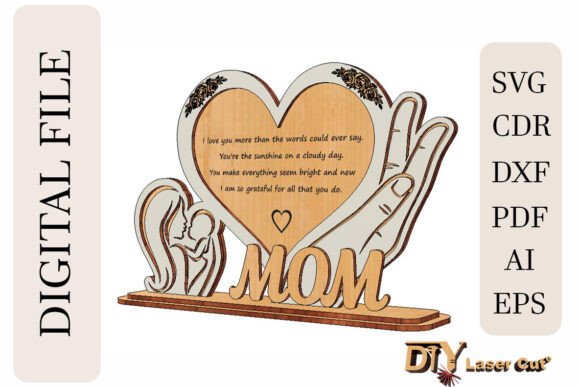
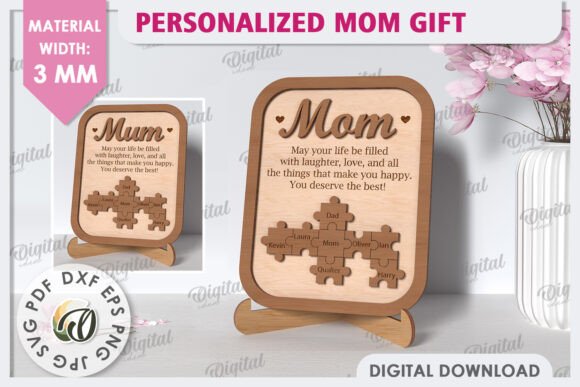
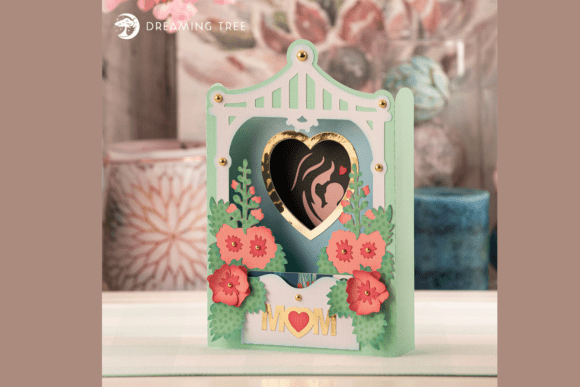
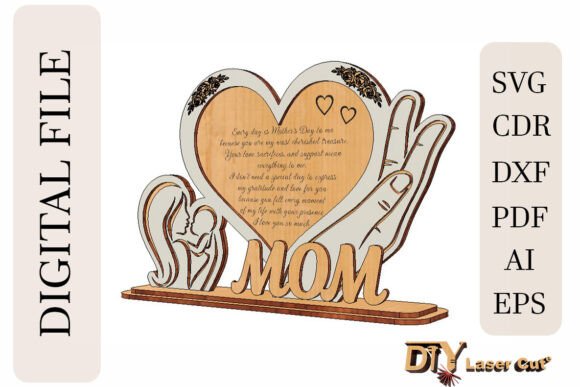
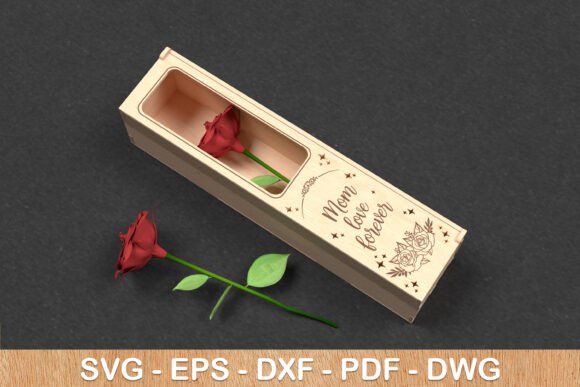
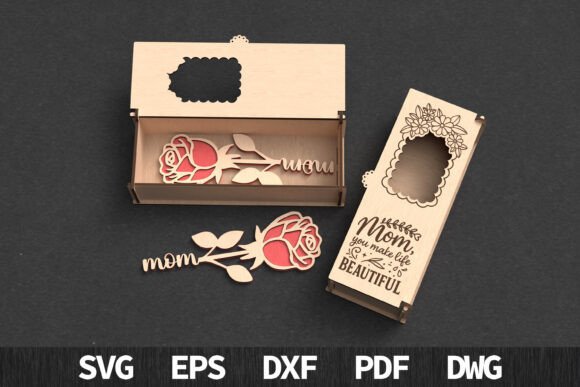
Opening the folder, I immediately noticed the composition: a rose intertwined with a gift box motif, and the word “Mom” woven in. The layout is clean, with a sentimental, cozy feel that leans perfectly into nursery decor, kitchen towels, and oversized tote bags. The rose isn’t overly realistic — it has a gentle, illustrated charm that reminds me of storybook art. This is the kind of design that makes a customer smile before they even touch the fabric. For a handmade product or a personalized gift, that emotional hook is priceless.
I could already picture this stitched onto a cream-colored canvas tote, with a few soft pink and sage green thread choices. The detail level isn’t overly complex, which is a relief. Too many intricate swirls and you end up with a muddy, dense mess on fabric. This one feels balanced: enough open space to breathe, but enough structure to be recognizable from a few feet away. For a custom apparel piece or an embroidered patch, that silhouette matters.
Where This Design Really Shines in Embroidery Projects
I ran through a dozen real-life scenarios in my head — the kind I actually encounter when prepping client orders. Here’s where Mom Rose Gift Box SVG Laser Cut would genuinely thrive:
- Sweatshirt embroidery for a Mother’s Day drop. The centralized motif would sit perfectly on the front of a crewneck, especially with a light stabilizer and a soft fill stitch for the rose.
- Tote bag design for a spring boutique market. A natural linen tote with this design would stop shoppers in their tracks.
- Baby embroidery on a receiving blanket or a tiny onesie. The word “Mom” makes it an instant baby shower gift, and the gentle floral doesn’t feel too mature.
- Apron or kitchen towel — I can see this as a set for a grandmother’s birthday. The gift box element ties directly into the idea of giving.
- Pillow cover or nursery decor. Stitched in a single color on a raw linen cushion, it becomes a family heirloom piece.
For Etsy sellers and small shop product creators, the design’s versatility is a major asset. You can offer it as a finished good, not just a digital file. A printable mockup using this vector art would also be a strong seller, allowing customers to visualize the final embroidered piece. The commercial embroidery potential is there, provided you double-check the licensing terms with the original creator — always a non-negotiable step.
Thinking Like a Stitch: How the Design Holds Up Under Needle and Thread
Now, let’s get into the nitty-gritty. An embroidery design isn’t just a picture — it’s a series of stitches that interact with fabric, stabilizer, and tension. I started mentally converting the rose and gift box elements into stitch types. The rose petals would do well with a smooth satin stitch or a light fill stitch, while the gift box ribbon could use a running stitch for crisp lines. The “Mom” lettering is the most critical part. If the text is too small, it will close up on terry cloth or looped fabrics. If it’s too large, it might overwhelm the floral. This design strikes a nice middle ground, but I’d still want to inspect the actual digitized file’s stitch density before running it on a thin fabric.
One morning, I was prepping a custom order for a client who wanted a Mother’s Day sweatshirt. She had a 5x7 hoop and a preference for soft, vintage pink. I sketched out how this design would fit. The rose and gift box would need to be slightly scaled down to fit comfortably, and I’d need to check the smallest details — like the inner lines of the ribbon. If the original vector has ultra-fine strokes, they might disappear when digitized, or worse, cause thread breaks. I’d recommend a test stitch on a scrap of similar fabric, ideally a cotton-poly blend, to see how the embroidery file behaves. Thread colors would be key: a dusty rose, a muted olive, and a warm cream. I’d avoid stark white for the box, as it might look too harsh on a natural fabric background.
Fabric, Hoop, and Stabilizer: The Unsung Heroes
I’ve ruined enough projects by ignoring the support system. Stabilizer choice can make or break this design. On a stretchy sweatshirt, I’d use a cutaway backing to prevent distortion. For a tea towel, a tear-away with a topping film would keep the satin stitches from sinking into the texture. The design’s open areas help: it’s not a solid block of stitches, so it breathes, reducing the risk of puckering. But those with small hoop sizes should beware — the design likely needs at least a 4x4 inch area, and even then, the text might get tight. Always confirm the hoop size compatibility before you start, especially if you’re working with a machine that maxes out at 4x4.
Dark fabrics deserve a special mention. Navy, charcoal, or deep burgundy would make the lighter thread colors pop, but the rose’s detail might get lost if the contrast isn’t right. I’d test the design on a dark fabric scrap with a white topper to ensure the pink stitches don’t look muddy. Conversely, on a lightweight cream fabric, the design would feel airy and delicate — perfect for a baby embroidery project or a holiday embroidery gift for a new mom.
When to Pause: Tricky Surfaces and Potential Pitfalls
Not every surface is a friend. I’d be cautious about stitching this directly onto a curved surface like a cap. The gift box’s straight lines might warp around the crown, and the lettering could tilt awkwardly. For a cap, I’d either reposition the design to the front panel’s flat area or skip it altogether. Thin fabric like a lightweight jersey could pucker easily if the digitized file has dense sections. Textured fabrics — think boucle or loosely woven linen — might swallow the finer details of the rose petals. I’d also avoid using this on a product that requires frequent washing without thorough testing, like a kitchen towel that gets laundered weekly. Satin stitches can fray over time, and the “Mom” lettering, if not properly digitized, might lose its crispness.
Another scenario: I once placed a similar floral design on a pocket of a custom apron. The pocket’s seam distorted the stitching, and the rose looked lopsided. Placement is everything. If you’re using Mom Rose Gift Box SVG Laser Cut on a garment with seams, zippers, or layered panels, always do a positioning test first. The design’s symmetry is forgiving, but it’s not foolproof.
How This Design Elevates Your Brand and Customer Trust
When I sell a finished embroidered item, I’m not just selling a sweatshirt — I’m selling a feeling. The Mom Rose Gift Box SVG Laser Cut design carries that warm, nostalgic emotion that makes a customer hit “add to cart” for a Mother’s Day gift. It’s recognizable without being generic, and it has a handmade charm that signals quality. For craft business owners, using this design on a tote bag or a pillow cover can instantly boost buyer engagement. People love gifting something that looks like it was made just for them, and this design delivers that personal touch.
From a brand consistency standpoint, it pairs well with soft, natural color palettes and eco-friendly packaging. I’d use it as a signature piece for a spring collection, perhaps alongside a simple floral monogram set. The finished product would photograph beautifully, making it ideal for Instagram-worthy product shots. The giftability is off the charts — a new mom receiving a onesie with this design would likely become a repeat customer.
Practical Embroidery Designer Notes for Real Results
I always keep a checklist handy when I’m about to run a new design, especially one originally intended for laser cutting. Here’s what I’d do with this one:
- Test on scrap fabric first — same weight, same color, same stabilizer you plan to use in production.
- Check thread color contrast in natural light and under artificial light. The rose can look very different on a warm cream versus a cool white.
- Review stitch density in the digitized version. If the original vector has tiny details, they might need to be simplified for embroidery.
- Confirm hoop size. If you’re planning to sell finished items, note the minimum hoop requirement clearly in your listing.
- Inspect small details like the ribbon knots and the center of the rose. Digitize them with a slightly looser density to avoid bulletproof patches.
- Test in black and white. A quick grayscale mockup shows whether the design’s values hold up without color. This is crucial for customer previews.
- Compare light and dark fabric backgrounds side by side. Some designs only look good on one.
- Use proper stabilizer — I’d lean toward a medium-weight cutaway for most apparel, and a water-soluble topper for towels or textured fabrics.
- Check licensing before selling finished items. Since the original files are provided as SVG, DXF, and others, reach out to the designer to confirm commercial use rights for embroidery digitization.
- Digitize with care. If you’re converting the vector yourself, run a sample and adjust the stitch angles so the rose petals flow naturally.
One more thing: if you’re offering this as a digital embroidery file to your own customers, you’ll need to invest in a high-quality digitization. The original vector is clean, but that doesn’t automatically mean it’s stitch-ready. I’d recommend a professional digitizer who understands underlay stitching and pull compensation.
Final Thoughts from the Stitching Room
From a design critic’s eye, Mom Rose Gift Box SVG Laser Cut is a charming, versatile piece of artwork that has a real place in the embroidery world. It’s not just a laser cutting file — it’s a heartfelt motif that can warm up a sweatshirt embroidery project, elevate a handmade product, or become a bestseller in a small shop product lineup. The mood is gentle, the theme is timeless, and the practical considerations are manageable with the right prep work.
I’d confidently use this for a Mother’s Day boutique collection, a baby shower gift set, or a cozy home decor line. Just remember: the file formats you received are a starting point. Treat them as design assets, and put in the stitching hours to make them shine. Test, tweak, and trust your eye. Your customers will feel the love in every thread.