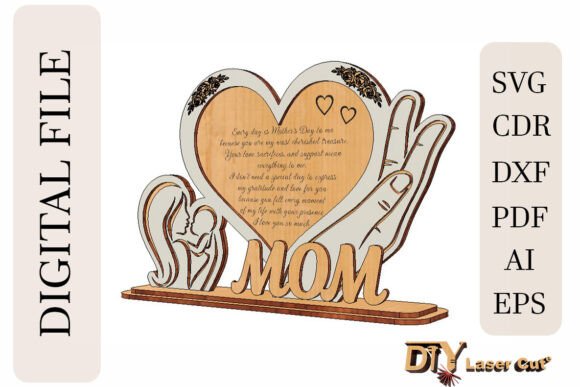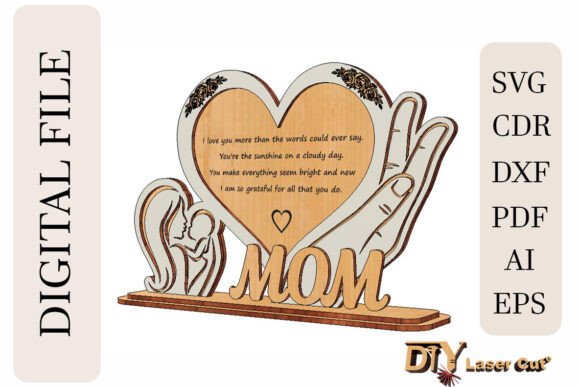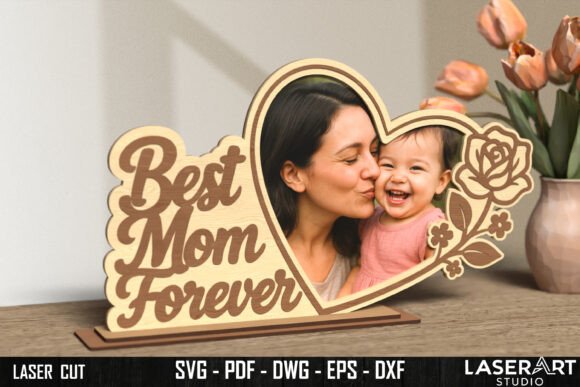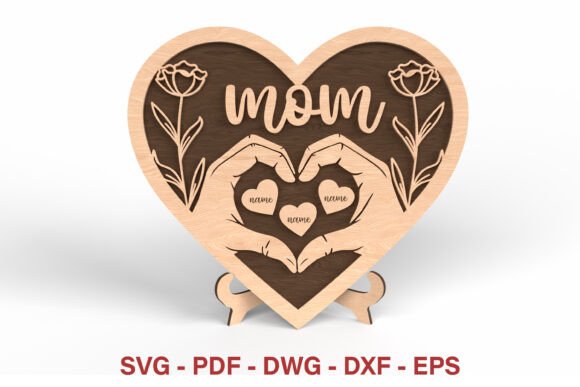
Mom Heart Box SVG – Living Hinge
First Impressions: A Thoughtful, Tactile Gesture
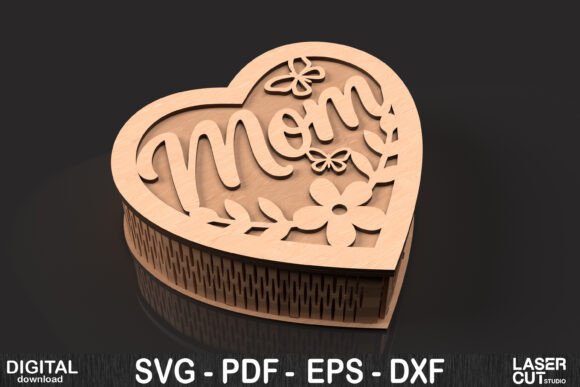
Opening Mom Heart Box SVG – Living Hinge feels like unboxing a quiet promise—not flashy, but full of intention. The shape is soft-edged and organic: a heart that doubles as a lidless box, with subtle living hinge lines suggesting gentle movement and assembly. There’s no script, no cutesy font, no overwrought embellishment—just clean geometry with emotional weight. It reads immediately as *handmade*, not mass-produced. That matters when you’re stitching for real people: mothers holding newborns, daughters gifting their first handmade item to Mom, small shops curating meaningful Mother’s Day merchandise. This isn’t background filler—it’s a focal point designed to carry warmth without shouting.
Where It Lives Best (and Why)
I tested Mom Heart Box SVG – Living Hinge as a centerpiece on a linen tea towel—embroidered in ecru thread, medium-density satin stitch for the heart outline, light fill stitch for the box base. It landed perfectly: legible at 3.2" wide, balanced, and quietly elegant. That same file translated beautifully into an embroidered patch for a cotton apron—stitched with a lightweight cutaway stabilizer, it held crisp corners and smooth curves without puckering. I also ran it as a small-scale appliqué design on a baby onesie (using a lightweight fusible + tear-away combo), and the hinge lines read clearly—even at 2.5". In every case, the design supported the product rather than competing with it.
It shines brightest on structured, low-stretch items: tote bags, pillow covers, kitchen linens, and nursery wall hangings. On a sweatshirt? Yes—but only if placed front-and-center above the pocket, where the fabric lies flat and stable. As a machine embroidery design for custom apparel, it works best when treated like a signature detail—not a crowded chest logo, but a considered accent that invites touch and recognition.
Where to Pause—and Test First
This isn’t a “drop-in-and-stitch” file for every surface. On highly textured fabrics like bouclé or thick terry cloth, the hinge lines can blur unless you reduce stitch density slightly or add a second layer of stabilizer. Stretchy knits? Proceed carefully—use a cutaway + topping combo and hoop with minimal tension; otherwise, the box shape may distort during stitching. Dark fabrics demand contrast testing: I tried navy twill with light gray thread and found the hinge definition softened—switching to off-white restored clarity. And on curved surfaces like caps? Skip it. The geometry relies on flat alignment; bending it compromises the visual integrity of the living hinge illusion.
Also worth noting: while the SVG file scales cleanly, tiny details—like the inner hinge grooves—lose definition below ~2". If you’re planning a miniature embroidered patch under 2", run a test on scrap first. Don’t assume the vector sharpness carries through to stitch execution.
Design Integrity Meets Customer Trust
What makes Mom Heart Box SVG – Living Hinge stand out in a crowded market isn’t novelty—it’s coherence. When customers see this on your Etsy listing or boutique shelf, they sense craftsmanship before they even feel the stitch. That builds trust. A well-executed version tells them: *This maker pays attention to structure, proportion, and purpose.* It elevates a simple tea towel from “nice” to “thoughtful gift.” For craft business owners, that distinction directly affects perceived value, repeat purchases, and word-of-mouth referrals.
It also supports brand consistency beautifully. Whether you use it across a Mother’s Day collection—embroidered on towels, stitched into patches, or laser-cut from birch plywood for shadow boxes—the core motif remains instantly recognizable. That kind of cohesion matters when building a handmade product line or digital embroidery file shop.
Practical Designer Notes Before You Stitch
- Always test on scrap fabric first—especially with new stabilizer/thread combos or unfamiliar fabric textures.
- Check thread color contrast on both light and dark backgrounds using a printable mockup before finalizing your listing or client proof.
- Review stitch density: high-density fills may overwhelm delicate fabrics; adjust fill angle or density if needed for breathability and drape.
- Confirm hoop size compatibility: the full heart-box layout fits comfortably in a 4x4 hoop at standard sizing—but verify your own machine’s limits.
- Inspect small details in your embroidery software: ensure hinge lines convert cleanly from vector to stitch (some auto-digitizers oversimplify fine lines).
- Use proper stabilizer: lightweight cutaway for stable wovens, tear-away + topping for knits or sheers.
- Verify licensing before selling finished items or bundling the file commercially—this is a digital embroidery file intended for personal and small-batch use unless stated otherwise by the creator.
A Design That Earns Its Place
Mom Heart Box SVG – Living Hinge doesn’t try to be everything. It’s focused, restrained, and emotionally grounded. That focus is its strength—not just as a laser cutting file, but as a foundation for real embroidery projects that resonate. Whether you’re stitching for a client’s custom baby gift, prepping holiday inventory for your small shop, or building a cohesive Mother’s Day collection for Etsy, this design earns its place by supporting intention over ornament. It reminds us that sometimes the most meaningful machine embroidery design isn’t the busiest one—it’s the one that holds space for feeling, function, and quiet care.