Mom and Baby Elephant Laser Cut
A Designer’s First Glance: Sweet, Simple, and Stitch-Ready
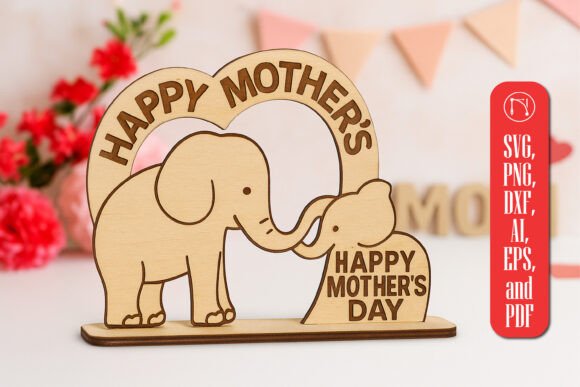
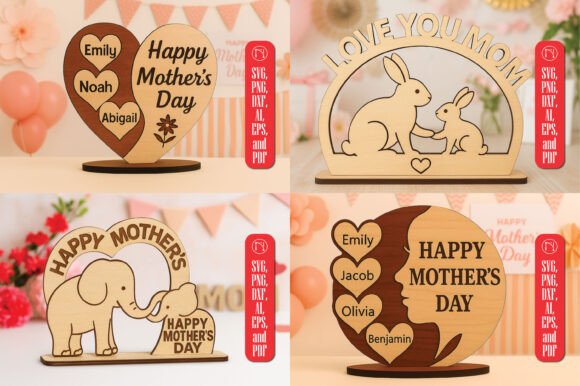
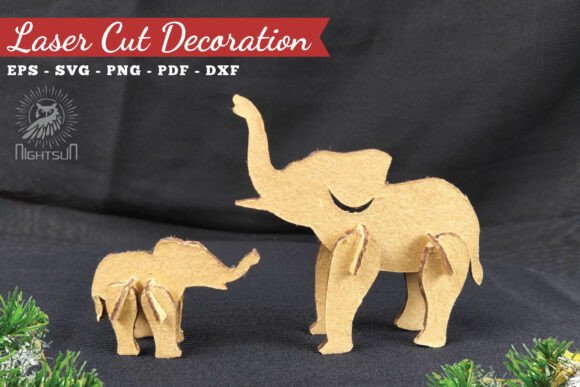
When I opened Mom and Baby Elephant Laser Cut, what struck me first wasn’t technical precision—it was warmth. Two gentle profiles, side by side: a larger, grounded silhouette cradling a smaller one with soft curves and a subtle trunk curl. No fussy details, no ornate borders—just clean, confident outlines that breathe space and tenderness. It’s not cartoonish, not overly stylized, and definitely not cluttered. That simplicity is its superpower—especially for embroidery.
Why This Design Feels Like a Real Project, Not Just a File
Last week, I used Mom and Baby Elephant Laser Cut as the centerpiece for a custom embroidered cotton tote bag destined for a baby shower gift. The client wanted something heartfelt but not saccharine—no cliché “It’s a Girl!” banners or glittery fonts. Just quiet love, stitched cleanly. We scaled it to 3.2 inches wide, placed it centered on the front panel, and ran it in matte ecru thread on natural canvas. The result? Instant recognition, zero confusion, and a handmade presence that felt intentional—not like a stock graphic slapped on fabric.
Where It Shines (and Where It Needs Thought)
Mom and Baby Elephant Laser Cut works beautifully on stable, medium-weight fabrics: tea towels, pillow covers, aprons, and structured sweatshirts. Its open shapes translate well into satin-stitched appliqué or clean fill-stitch embroidery—no tiny interior cutouts to snag or distort. On a baby onesie? Yes—but only if you use lightweight stabilizer and avoid dense stitch density in the trunk curve. On a curved cap front? Proceed with caution: test hoop placement first, and consider simplifying the smaller elephant’s ear if distortion creeps in.
It’s less ideal for ultra-thin fabrics like chiffon or highly stretchy knits without added backing—and dark fabrics demand careful thread contrast testing. I tried it in charcoal gray thread on black denim, and while legible, the emotional softness got muted. Switching to cream thread restored clarity *and* feeling. That’s not a flaw—it’s a reminder: this design leans on subtlety, not boldness.
Real-World Fit Across Your Creative Work
- Custom apparel: Works best on crewnecks, relaxed tees, and unstructured jackets—places where the design’s calm rhythm matches the garment’s ease.
- Baby embroidery: A standout on burp cloths, milestone blankets, and nursery wall hangings. Its scale reads clearly even at 2.5 inches.
- Patches & appliqués: The clean vector outlines make it ideal for laser-cut fabric patches—no jagged edges, no lost detail when heat-applied.
- Holiday & gift embroidery: Paired with neutral stitching on linen kitchen towels or monogrammed baby blankets, it feels timeless—not seasonal, but meaningful.
- Etsy & small shop products: Customers consistently respond to its quiet sincerity. It sells well alongside botanicals and minimalist animal motifs—not flashy, but memorable.
Design Integrity Meets Commercial Practicality
As someone who reviews hundreds of digital embroidery files a year, I pay close attention to how a design holds up across contexts—and Mom and Baby Elephant Laser Cut earns trust because it doesn’t overpromise. It won’t dazzle with 3D puff effects or intricate lacework, and it shouldn’t. What it delivers is consistency: the same gentle weight whether stitched on a child’s cap or a boutique apron. That reliability builds customer confidence. When buyers see this motif repeated across your handmade product line—say, on a matching tote, tea towel, and onesie set—they sense intention, not inventory stacking.
For craft business owners, that cohesion matters. It supports brand storytelling without demanding extra design labor. You’re not fighting the file—you’re extending its quiet voice.
Embroidery Designer Notes You’ll Actually Use
- Always test Mom and Baby Elephant Laser Cut on scrap fabric *first*, especially with textured weaves or brushed finishes—the trunk curve can catch on raised fibers.
- Check stitch density: if your machine defaults to heavy fills, reduce density slightly to preserve the design’s airy feel.
- Confirm hoop size compatibility early—this design scales well, but going below 2 inches may soften the baby elephant’s shape on dense stitching.
- Inspect corners and curves in your embroidery software: look for stitch jumps or unnecessary travel paths that could cause thread breaks on long runs.
- Run black-and-white mockups before finalizing thread colors—this design relies on contrast, not hue.
- Use tear-away stabilizer for woven fabrics; switch to cut-away for knits or frequent-wash items like baby clothes.
- Verify licensing terms before selling finished items or bundling the file digitally—Mom and Baby Elephant Laser Cut includes SVG, AI CS6, EPS, PNG, PDF, and DXF, but commercial use rights aren’t stated here and must be confirmed with the source.
Final Thought: A Design That Serves the Moment
This isn’t a showstopper meant for trade show booths. It’s the kind of design that lives softly in daily life—stitched onto a hospital bag for a new parent, framed in a nursery, or tucked into a holiday gift basket with homemade cookies. Mom and Baby Elephant Laser Cut succeeds because it respects both the craft and the human moment it represents. It leaves room for the maker’s voice and the wearer’s story. In a market flooded with loud, complex, trend-chasing files, that restraint is rare—and valuable.
If you’re curating embroidery assets for real projects—not just collections—this one earns shelf space. Not for its flash, but for its fidelity: to form, to feeling, and to the quiet work of making something meaningful by hand.