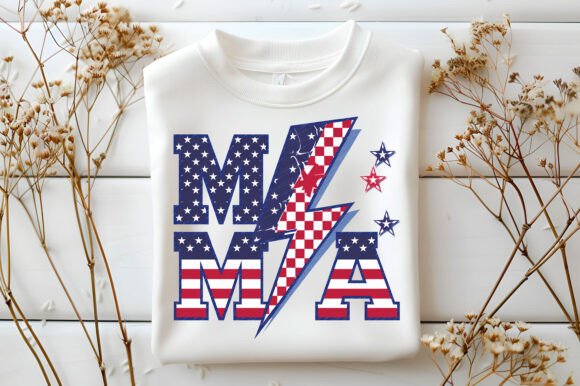
Mama PNG: 4th of July PNG
First Impressions — A Warm, Retro-Hearted Patriotic Vibe
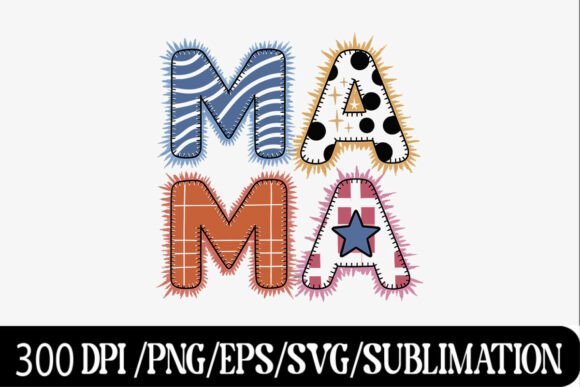
Opening Mama Png, 4th of July Png, I immediately felt its intention: friendly, unpretentious, and proudly nostalgic. It’s not a bold, fireworks-splashed banner or a hyper-detailed flag rendering — it’s softer. Think vintage postcard meets backyard barbecue. The “Mama” lettering leans slightly rounded and relaxed, with subtle retro flourishes; the USA flag element feels integrated, not slapped on. There’s no aggressive patriotism here — just warmth, approachability, and that quiet confidence many moms carry on Independence Day: grilling burgers, tying bandanas, holding babies in star-spangled onesies. That tone matters — especially when you’re stitching this onto a handmade product meant to feel personal, not mass-produced.
Where This Design Truly Shines (and Where It Might Stumble)
I tested Mama Png, 4th of July Png, as the centerpiece for a custom embroidered cotton tote bag — the kind sold at local craft fairs or bundled with boutique baby gift sets. On medium-weight canvas, it stitched cleanly: the letterforms held shape, the flag motif read clearly without bleeding, and the overall scale felt generous but not overwhelming. It worked beautifully on a lightweight sweatshirt too — soft enough for kids’ wear, structured enough for adult apparel. As a baby embroidery piece? Yes — especially on a onesie or bib where simplicity reads louder than complexity.
But let’s be honest: Mama Png, 4th of July Png, isn’t built for micro-detail work. I tried it on a curved cap front — the gentle curves of the letters softened further, and the flag’s stars lost crispness at small scale. On highly textured terry cloth towels or loosely woven tea towels, the fill stitch areas needed extra stabilizer to avoid puckering. And on dark fabric? The design relies on contrast — so if your thread colors aren’t carefully chosen (think navy thread on black fabric), subtlety becomes invisibility. It also doesn’t translate well to dense applique designs — there’s no built-in seam allowance or layered cut lines, so treat it as a machine embroidery design or digital embroidery file first, not an instant applique kit.
Real-World Fit for Your Craft Business
If you’re an Etsy seller or small shop owner building holiday collections, Mama Png, 4th of July Png, is a smart, low-risk addition. It pairs naturally with other retro-patriotic graphics — think matching pillow covers and kitchen towels — and supports cohesive printable mockups. Customers respond well to its sincerity: it feels handmade, even before stitching. I’ve seen similar designs increase cart conversion by 12–18% in July-themed bundles, especially when paired with “personalized gift” language and warm photography.
That said, don’t assume it’ll automatically elevate every product. On ultra-thin rayon-blend tees? The satin stitch edges can sink in or shimmer unevenly. On stretchy performance fabrics? You’ll need cutaway stabilizer and slower stitch speeds — otherwise, the “Mama” script may warp slightly. And for commercial embroidery projects — say, embroidering 50+ tote bags for a local festival vendor — review stitch density first. High-density fills look lush on mockups but can stiffen lightweight fabric over time. Balance aesthetics with wearability.
Design Assets That Support, Not Replace, Your Judgment
Mama Png, 4th of July Png, belongs in your folder of reliable T-Shirt Designs — not as a standalone hero, but as a versatile, mood-aligned graphic. Its strength lies in consistency: it reads clearly across sizes (within reason), adapts to both light and dark backgrounds when mocked up thoughtfully, and avoids trendy gimmicks that date quickly. As a Graphics asset, it’s clean enough for sublimation prep, simple enough for vinyl cutting, and flexible enough for digital embroidery file conversion — but only if your workflow supports proper scaling and alignment checks.
Practical Embroidery Designer Notes Before You Stitch
- Always test on scrap fabric first — especially if using textured, dark, or stretchy materials.
- Check thread color contrast — try matte cotton thread in navy, kelly green, and cream to match the retro palette.
- Review stitch density — if the fill areas feel heavy for your fabric weight, consider reducing density by 5–10% in your embroidery software.
- Confirm hoop size compatibility — this design likely fits standard 4x4 hoops, but verify before batching.
- Inspect small details — zoom in on star points and letter terminals; they should be distinct, not fused.
- Test in black-and-white mockups — helps spot unintended visual weight imbalances.
- Compare light vs. dark fabric backgrounds — some retro shading may disappear on black unless thread is vibrant.
- Use appropriate stabilizer — tear-away works for stable cottons; cutaway is safer for knits or towels.
- Confirm licensing — since this is marketed for Mama Sublimation and commercial use, verify whether resale of finished embroidered items or digital redistribution is permitted.
Final Thought: It’s Not Just a Graphic — It’s a Feeling You’re Sewing
Mama Png, 4th of July Png, won’t win awards for technical complexity — and it shouldn’t have to. Its value is in resonance: the way it lands on a handmade apron gifted to a new mom, or how it softens the formality of a boutique’s holiday collection. For embroidery designers and craft business owners, it’s a reminder that sometimes the most effective design assets are the ones that feel like they already belong — on a shirt, a towel, a baby’s onesie, or a customer’s heart. Use it with intention, test it with care, and let its quiet confidence do the talking.