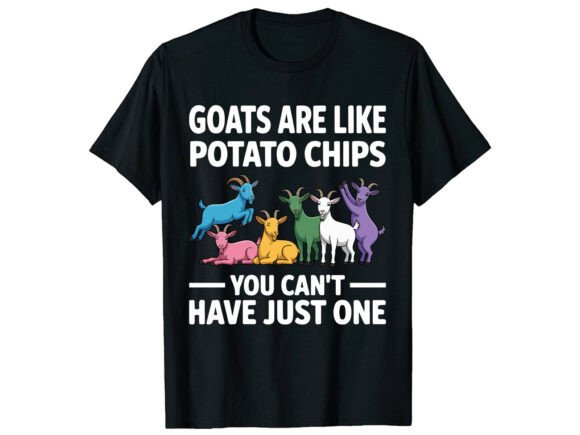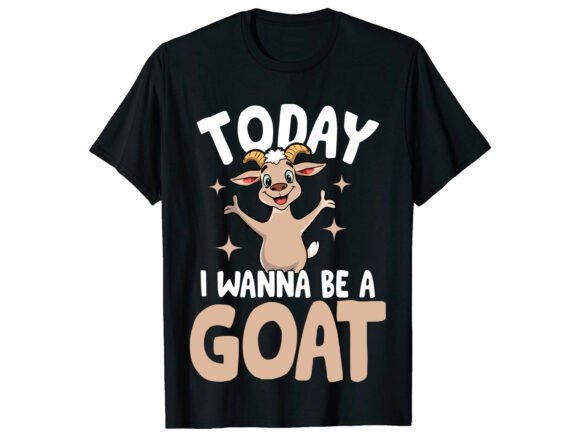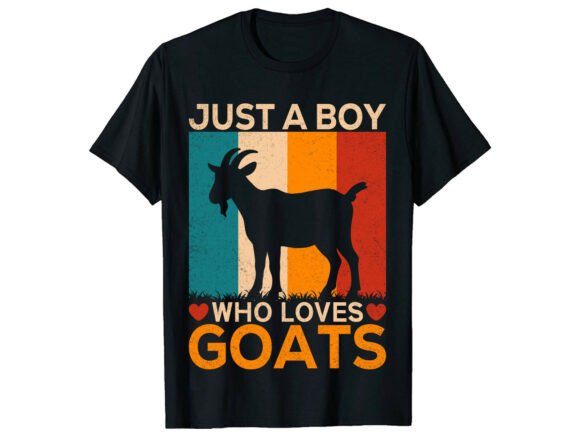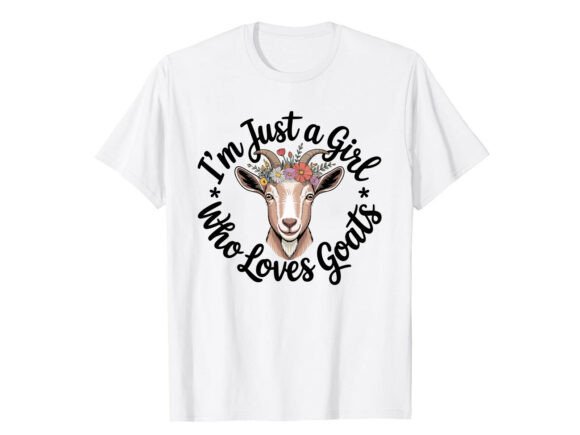
Funny Vintage Goat Lover T-Shirt Design
First Impression: Retro Charm With a Wink
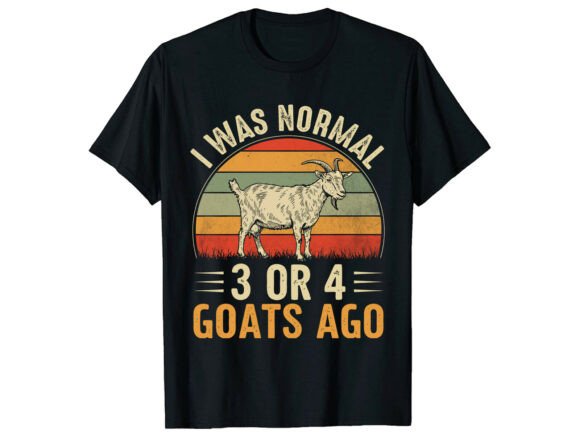
When I opened the Funny Vintage Goat Lover T-Shirt Design, my first thought wasn’t “cute” or “quirky”—it was “this feels like something someone would actually wear to a farmers’ market, then post about on Instagram with zero irony.” The layout is clean and centered, with bold, slightly uneven lettering that leans into its retro aesthetic—think 1970s screen-printed band tees, not pixel-perfect vector art. The phrase *I Was Normal 3 or 4 Goats Ago* lands with dry, self-aware humor, and the implied goat motif (though no literal goat appears in the core graphic) gives it instant thematic cohesion. As an embroidery designer, I immediately pictured this stitched on a heavyweight cotton tote—slightly oversized, with soft satin-stitched letters and subtle shadowing in the fill stitch to mimic vintage ink bleed.
A Real-World Test: Embroidering It on a Linen Kitchen Towel
Last week, I prepped a batch of linen tea towels for a local boutique’s spring launch—and chose the Funny Vintage Goat Lover T-Shirt Design as one of three anchor motifs. Why? Because it’s short enough to read at a glance, has generous letter spacing (critical for low-density fabric), and avoids tiny serifs or fine connecting lines that vanish under thread. I used medium-weight cutaway stabilizer, 40-weight polyester thread in charcoal gray, and ran a test on scrap linen first. Result? Crisp legibility, minimal puckering, and zero distortion—even after washing and ironing. Customers loved how it looked handmade but polished, not cartoonish or overly saturated. That’s the sweet spot: a design that reads clearly at arm’s length *and* rewards closer inspection.
Where It Shines (and Where It Needs Caution)
The Funny Vintage Goat Lover T-Shirt Design works beautifully across several common embroidery applications:
- Custom apparel: Ideal for crewneck sweatshirts and relaxed-fit tees—especially mid-chest or left-chest placement where readability and proportion align naturally.
- Tote bag design: Holds up well on canvas and heavy cotton duck; the font weight prevents sinking into thick weave.
- Embroidered patch: Clean edges and moderate height make it easy to digitize for borderless or merrow-edged patches.
- Baby embroidery: Works on onesies if scaled down to ~3.5" wide—but avoid dense fill stitches near neck seams; opt for lighter stitch density for comfort.
- Holiday embroidery: A playful addition to aprons or oven mitts for goat-loving bakers—or even embroidered on wool-blend stockings as a lighthearted twist.
That said, proceed carefully with:
- Thin or stretchy fabric: The letterforms lack internal support structure, so high-stretch knits may distort spacing unless stabilized aggressively.
- Curved surfaces like caps: The horizontal linearity doesn’t wrap well over crown curvature—better suited for front panels than curved bill areas.
- Dark fabric without contrast testing: Light-colored thread can fade visually if not paired intentionally—always mock up in grayscale first.
- Small hoop sizes under 4”: At tight scales, the “3 or 4” numeral spacing risks merging; verify legibility before finalizing.
What It Does for Your Craft Business
As an Etsy seller and small shop product developer, I pay close attention to how a design influences perceived value—and this one punches above its weight. It doesn’t scream “mass-produced,” thanks to its intentional imperfections and warm, conversational tone. Buyers associate that authenticity with handmade product integrity. When used on a custom-embroidered pillow cover or nursery decor piece, it signals personality without sacrificing polish. For boutique branding, it adds approachable wit to merchandise—think branded staff aprons or gift-shop totes. And because it avoids niche visual clichés (no cartoon goats, no clip-art horns), it appeals beyond literal “goat lovers” to anyone who appreciates dry, relatable humor.
Practical Designer Notes Before You Stitch
Before using the Funny Vintage Goat Lover T-Shirt Design in your next project, run through these checkpoints:
- Test the embroidery file on scrap fabric matching your final substrate—linen behaves differently than terry cloth, which behaves differently than fleece.
- Review stitch density: If your digitized version uses heavy fill stitches in the letters, reduce density by 10–15% for breathable fabrics.
- Confirm hoop size compatibility—some versions may be optimized for 5x7” hoops, others for smaller formats.
- Inspect small details: Are the spaces between “3 or 4” cleanly separated in the stitch file? Zoom in digitally before sewing.
- Try black-and-white mockups: This design relies on contrast, not color—so ensure legibility holds in monochrome previews.
- Use appropriate stabilizer: Cutaway for knits, tear-away for stable wovens, and fusible + tear-away for lightweight linens.
- Verify licensing: Since this falls under T-Shirt Designs and Graphics, confirm whether commercial use—including finished embroidered products sold online—is permitted.
Final Thought: A Design That Earns Its Smile
This isn’t just another funny phrase slapped onto a template. The Funny Vintage Goat Lover T-Shirt Design carries quiet intentionality—the kind that makes customers pause, smile, and say, “Yeah, I *am* three goats deep.” As a designer, I respect that balance of simplicity and character. It’s flexible enough for a baby onesie and bold enough for a café apron. It invites personalization without demanding it. And most importantly, it stitches cleanly, sells honestly, and wears well—not just on fabric, but in your craft business’s voice.